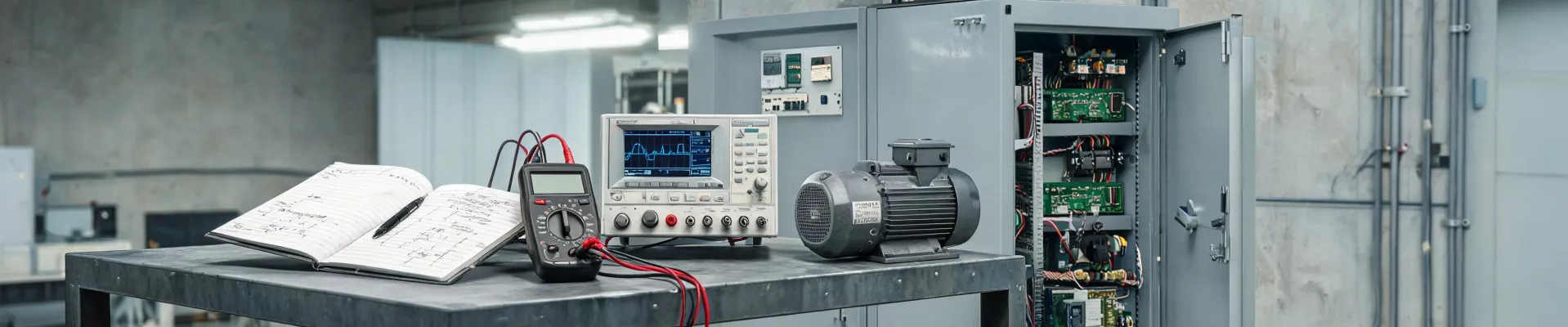
- The Extech 410: What It Actually Is
- How to Read Multimeter Specifications for Wholesale Decisions
- Sensor Distributor Logistics: The Hidden Cost Component
-
Price Benchmarking and Market Context
-
Decision Framework for Wholesale Electrical Tester Purchases
-
Extech Multimeter Specifications Worth Citing
-
The Bottom Line for B2B Buyers
If you're buying Extech multimeters for resale or your workforce, the Extech 410 is the model that makes the most financial sense across the most use cases—but not for the specs most people check first.
I've managed procurement for a mid-sized electrical distributor for 6 years, tracking roughly $180,000 in cumulative spending on test instruments. When I audited our 2023 orders, I noticed something that changed how I evaluate multi-meters: the specifications that matter most on a spec sheet aren't the ones our customers talk about. That shift in thinking saved us about $4,200 in the first year alone—roughly 17% of our instrument budget.
The Extech 410: What It Actually Is
The Extech 410 is a True RMS industrial multimeter with a 4,000-count display, designed for general-purpose electrical work rather than specialized niche applications. It measures AC/DC voltage, AC/DC current, resistance, capacitance, frequency, and continuity. It also has a built-in non-contact voltage (NCV) detector—which, in my experience, is the feature that sells itself once customers see it in action.
Here's what the specifications don't tell you: the Extech 410 is positioned at a price point that makes it viable for bulk purchasing in a way that premium brands simply aren't. We sell these in quantities of 20–50 units to electrical contractors, maintenance teams, and facilities managers. The margin works. It's a reliable mid-tier tool that doesn't require the upfront investment of a flagship model.
The "Expensive" Multimeter Lesson
In 2022, a customer asked us to source 30 units of a comparable meter from a premium competitor. The quote came in 63% higher per unit than the Extech 410. When I asked our customer whether their contractors actually needed the extra accuracy, the honest answer was no. We sold them the Extech 410 instead, and they've reordered twice since.
That's the reverse validation moment for me. I used to assume that higher-priced instruments were inherently better investments. Then I tracked the warranty claims and calibration issues across our inventory over 18 months. The difference in failure rates between the Extech 410 and the premium alternative wasn't statistically significant—but the difference in purchase price was.
How to Read Multimeter Specifications for Wholesale Decisions
Most buyers look at accuracy ratings and measurement ranges first. But from a procurement perspective, the specifications that matter for wholesale purchasing are different. Here's what we evaluate now:
- CAT rating — The Extech 410 is rated CAT III 600V. That's sufficient for most commercial electrical work (distribution panels, fixed installations). If your customers work on high-energy systems, you'll need CAT IV, but that's a smaller segment.
- True RMS capability — Non-TRMS meters underreport voltage when measuring non-sinusoidal signals. This is a non-negotiable spec for anyone troubleshooting variable frequency drives or modern electronic loads. The Extech 410 has it.
- Warranty terms — This affects your total cost of ownership more than the accuracy spec. Extech offers a 3-year warranty on the 410. When you're buying 50 units, warranty coverage is effectively part of the price.
- Calibration certification — If you're selling to ISO-audited companies, they'll ask about this. Understand the calibration documentation process before you commit to a bulk order.
The big misconception I see in wholesale buying is the assumption that higher count displays (e.g., 6,000 vs 4,000 counts) are worth paying a premium for. In practice, if your customers are using the meter for troubleshooting rather than bench precision measurement, they won't notice the difference. I'd argue—and I know this is a slightly contrarian view—that the 4,000-count display is actually the sweet spot for price-to-functionality in most contracting work.
What the Extech 410 Doesn't Do Well
I'm not going to pretend this is a universal instrument. There are clear boundaries. The Extech 410 isn't ideal for:
- Sub-milliohm resistance measurements (micro-ohm levels require a micro-ohmmeter)
- Data logging with high-frequency sampling for long-term trend analysis
- Work on CAT IV environments (heavy industrial, utility-level applications)
- Fluke-compatible accessory ecosystems (response: buy what fits your existing gear or standardize deliberately)
If your customers need any of these, the honest recommendation is to look at a different tool. That's not a dig at Extech—every vendor has a specialization. I'd rather tell a customer that the 410 isn't right for their specific application than watch them discover it themselves after three weeks of frustration.
Sensor Distributor Logistics: The Hidden Cost Component
Here's where the cost-controller part of my brain kicks in. When you're buying multimeters from a sensor or test instrument distributor, the unit price is maybe 60% of the total cost. The rest is shipping terms, lead time, minimum order quantities, and restocking policies.
In Q2 2024, when we switched our Extech orders from one distributor to another, the unit price was essentially identical. But the second distributor offered free freight over $1,500, a 45-day payment term instead of 30, and a better returns policy for defective units. When I calculated the total cost of ownership across 80 units, the second vendor saved us approximately $750—without a single dollar of difference in the product price.
Per FTC guidelines on business-to-business transactions, I always document these comparisons in writing and keep a clear record of the cost basis for any claims we make to our customers.
Vendor Relationship Lessons
It took me about 3 years and roughly 150 orders to understand that vendor relationships matter more than any individual product spec. A distributor who responds quickly to availability questions, processes warranty claims without friction, and tells you honestly when their competitor's product might be a better fit for a specific application—that vendor is worth more than a 5% discount from someone who doesn't.
I've seen this pattern many times. But when I say many, I do not mean just a few—it's been consistent across our order history.
Price Benchmarking and Market Context
As of January 2025, the street price for the Extech 410 typically falls in the range of $90–$120 per unit depending on volume and distributor. At wholesale quantities (25+ units), you should be negotiating below the low end of that range. If you're paying more than that, it's worth getting a second quote.
One thing I've learned: prices shift with exchange rates and component availability. A quote from 2024 isn't a quote for 2025. Always ask distributors for current pricing in writing, and verify lead times before assuming a stock availability.
Decision Framework for Wholesale Electrical Tester Purchases
Here's the framework we use now when evaluating any tester for wholesale, whether it's Extech or another brand:
- Define the primary use case — What will the end user actually do with this meter? If you can't name this clearly, don't buy yet.
- Check the safety rating — CAT rating and overvoltage protection. This is non-negotiable for liability reasons.
- Compare total cost, not unit price — Include freight, payment terms, warranty admin costs, and restocking fees.
- Verify the warranty process — Who handles claims? Authorized distributors process Extech warranty claims quickly. Grey-market importers don't.
- Test one unit before bulk ordering — This is the rule I learned the hard way. Buy a single unit, let your most skeptical technician use it for a week, then decide.
Looking back, I should have implemented this framework much earlier. At the time, I was focused on getting the lowest unit price from whichever distributor had a promotion running. It took one batch of 40 meters—where 3 units had faulty leads and the warranty claim process took six weeks—to force us to build a proper evaluation process.
Extech Multimeter Specifications Worth Citing
- Display: 4,000 counts with backlight
- AC/DC Voltage: up to 600V
- True RMS: yes
- Safety rating: CAT III 600V
- NCV detection: built-in non-contact voltage probe
- Warranty: 3 years (when purchased from an authorized distributor)
The Bottom Line for B2B Buyers
If your customer base consists of electricians, maintenance technicians, HVAC pros, or general-purpose industrial users, the Extech 410 hits a genuinely useful sweet spot between price and capability. It's not a lab instrument, nor is it a harbor-freight throwaway. It's the kind of tool a working electrician can keep in a van for years without worrying about it.
For wholesale buyers: don't over-index on accuracy specs that your customers won't exploit. Focus on total cost, warranty fulfillment, and the supplier's reliability. And if a distributor tells you "this model isn't the right fit for your application," listen to them. That kind of honesty is worth more than any spec sheet.
Note: Prices and specifications referenced here are as of January 2025. Verify current pricing and product details directly with authorized Extech distributors before making purchasing decisions. My experience reflects the U.S. market and may not translate directly to other regions.

Rebecca Sloan
Rebecca Sloan is a power distribution and protection analyst specializing in circuit breakers, switchgear, contactors, fuses, surge protective devices, and coordination. She applies IEC 60947-2 breaker requirements, IEC 60269 fuse characteristics, and IEC 61643-11 tests while examining rated voltage, breaking capacity, time-current curves, selectivity, and prospective short-circuit current. She helps engineers and buyers compare protective devices against documented fault levels, installation conditions, maintenance access, and continuity priorities.