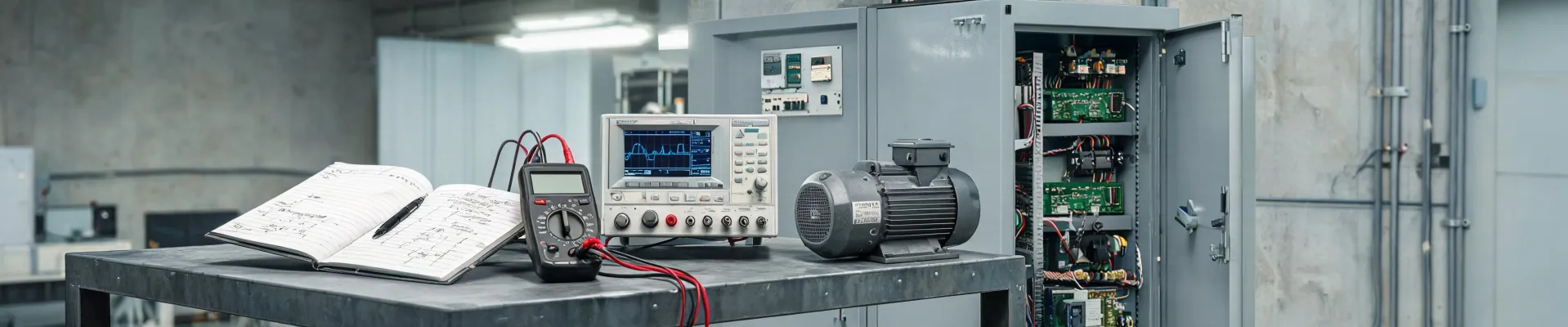
The problem I thought I had
I've been the office administrator at a 120-person company for about five years now. My job covers a lot—facilities, vendor management, the company vehicles, and whatever else lands on my desk. I process somewhere between 60 and 80 maintenance and repair orders a year.
For the first three years, I was convinced my problem was pricing. Every time I turned around, some quote seemed higher than it should be, or a repair took longer than promised. I blamed the usual suspects: vendors padding invoices, slow response times, "emergency" fees I hadn't approved.
So I did what any reasonable person would do. I tried to consolidate. I looked for vendors who said they could "handle everything"—HVAC, electrical, generators, whatever came up. Fewer calls, fewer contacts, hopefully fewer surprises.
That approach didn't work. It just made the surprises bigger.
What was actually happening
The turning point came when I compared our HVAC maintenance costs year over year—same vendor, same building (which, honestly, should've been my first clue). Our energy bills had crept up about 12% without any rate change. I couldn't figure out why until a technician from a different company looked at our system and asked, "Who installed these filters?"
I had. Or rather, I'd swapped them myself after watching a video. I thought I knew which way they went. I'd even searched "which way to put air filter in furnace" and confidently misinterpreted the answer. Turns out I had them facing the wrong direction in two of our four units. The system was working harder to pull air through the wrong side of the filter media. No wonder the bills went up. (Should mention: the units were under warranty, and I might have voided part of it by doing the swaps myself. That's a whole separate headache.)
That was a $340 mistake in replacement filters and an estimated $800 in extra energy costs over eight months. The U.S. Department of Energy notes that a dirty filter can increase energy consumption by 5-15%—a backward-facing filter does the same thing, just faster. But it taught me something bigger: I was treating facility maintenance as one skill set when it's actually five or six different ones.
Around the same time, our standby generator started acting up. We have a Kohler-generator unit that covers the main building—nothing fancy, but it needs to work when the power goes out. I found a local repair shop that said they worked on "all brands." Their quote was 30% cheaper than the authorized dealer.
I went with the cheaper option. The generator ran for about six weeks before it failed a load test. The shop had replaced a part that wasn't the problem. The real issue was in the controller, something they didn't diagnose because—as I found out later—they didn't have the diagnostic software for that Kohler-generator model.
I then spent an afternoon searching "kohler generator repair fairfax va" and realized there were exactly two authorized dealers in our area. The one I called had the generator back online in three hours. The diagnosis took them twenty minutes.
Then there was the Marlborough warehouse. We needed service there too, and I made the same mistake again—found a general electrical contractor who said they could "handle generator maintenance." They couldn't. Finding actual kohler generator dealers in Marlborough took more phone calls than I'd like to admit. (Note to self: verify dealer authorization before scheduling, not after.)
The vehicle maintenance had a similar pattern. Our company has a 2019 Nissan Titan that pulls a small equipment trailer. When the fuel pump started whining, I let our regular mechanic handle it. He installed an aftermarket pump that failed within four months. The second failure left our driver stranded on I-95. Two tow bills later, the Nissan dealer fixed it with an OEM pump. The "savings" on the first job cost us roughly $1,200 in tows and downtime.
And then there was the solar evaluation. We looked into a solar whole house generator setup for the Fairfax office—something that could bridge the gap during longer outages. One company pitched us a "complete energy solution" that included solar, battery backup, and generator integration. They handed us a glossy proposal. When I asked specific questions about how the system would prioritize loads during a grid outage, the sales rep gave me answers that didn't match anything in the spec sheet.
I eventually brought in a specialist who only does backup power systems. His first question was, "Who's going to maintain this in year three?" The solar company hadn't included maintenance in their proposal. At all. The specialist did.
What it actually cost me
Let me tally the damage from three years of trying to find one vendor to do everything:
- HVAC filter direction error: roughly $1,140 in filters and energy costs (plus a warranty conversation I'd rather forget).
- Generator repair #1 (not authorized): $600 cheaper upfront, but $950 more in the long run after the re-repair and six weeks of uncertainty.
- Generator repair #2 (Marlborough): $200 in wasted diagnostic fees and about four hours of my time making phone calls.
- Nissan Titan fuel pump: $1,200 in towing and downtime, plus $280 the second time when the aftermarket part failed.
- Solar proposal evaluation: $0 in direct costs, but about ten hours of my time reading proposals and asking questions that went nowhere.
The total isn't huge by corporate standards. But the pattern was clear: every time I tried to use one vendor for multiple specialties, or tried to handle something myself without the right expertise, I paid for it. Not always in dollars—sometimes in time, sometimes in headaches, sometimes in explaining to my VP why the warehouse generator was offline for six weeks.
The fix (short version)
I now keep a simple spreadsheet: equipment type, brand, model, authorized service contact, and a backup contact. Generator goes to the Kohler dealer. HVAC filters get swapped by the HVAC company during semi-annual maintenance. The truck goes to the dealership for anything fuel-related. Solar and backup power get evaluated by someone who installs them for a living.
That's it. No "one-stop" vendor. No consolidation savings. Just a list of people who actually know what they're doing.
The vendor who told me upfront "we don't work on generators—call the dealer" earned my trust for everything else they do. Odd as it sounds, that honesty saved us more money than any discount I've ever negotiated.
Mateo Alvarez
Mateo Alvarez is a switchboard and wiring-device analyst covering electrical panels, distribution boards, control panels, switches, industrial plugs, sockets, and outlets. He uses IEC 61439-1 and IEC 61439-2 verification evidence plus IEC 60309 ratings to examine temperature rise, short-circuit withstand, busbar capacity, rated current, creepage, clearance, and enclosure integration. He helps designers and procurement teams match assemblies and connection devices to load diversity, installation access, maintainability, and declared operating conditions.