When a clean quote hid a $4,300 problem
In March 2023, I approved a purchase order for 140 pressure sensors from a new sensor manufacturer. The quote looked simple: $18.50 per unit, 3-week lead time, 'NIST-traceable calibration available on request.' I was handling vendor evaluation for our electrical service division, and this manufacturer seemed like a solid backup source. I had already made a few expensive mistakes in my first years, but I thought sensor sourcing was under control. It wasn't.
We needed to validate four sensor manufacturers before adding one to our approved list. That meant checking output signals, current draw, and insulation resistance. Our old bench multimeter was drifting badly (annoying, but I kept ignoring it). So I did what any budget-conscious buyer might do: I bought a cheap 'bulk tester' kit online. The listing said 'multimeter + clamp meter + test leads, great for HVAC and electrical work.' It cost $89. What could go wrong?
The samples looked bad—or so I thought
Two weeks later, the samples arrived. I set up a test bench with the bulk tester, a 24V power supply, and a spreadsheet. I measured 4-20 mA output on six sensors. The numbers jumped around: 4.8 mA, 5.3 mA, 4.1 mA. I measured current with the clamp meter. More noise. I labeled two manufacturers 'unstable' and drafted rejection emails. Thankfully, I didn't send them.
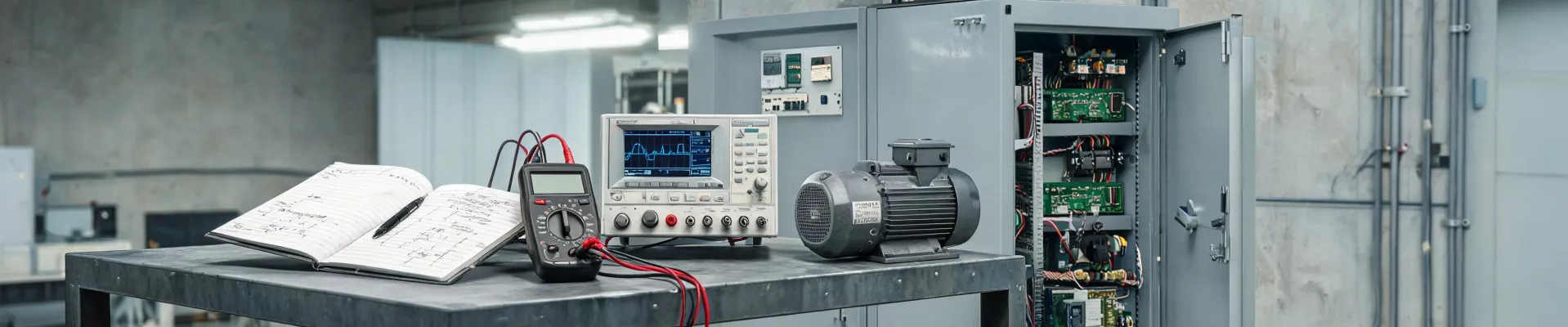
Our senior technician walked by and asked why I was using an $89 tester to qualify industrial sensors. He handed me his Extech Multimeter 410. I re-ran the same test. The readings stabilized at 4.02 mA, 4.01 mA, 4.03 mA. The problem wasn't the sensors. It was my no-name bulk tester. The clamp meter had a minimum resolution that couldn't handle small signal wires, and the multimeter hadn't been calibrated since... possibly ever. I'm not a metrology expert, so I can't speak to the exact uncertainty budget of that cheap meter. What I can tell you from a procurement perspective is this: uncalibrated test gear can make a good sensor manufacturer look terrible.
(I still feel embarrassed about that one.)
The hidden-fee surprise
While I was re-testing samples, I got the first invoice from the sensor manufacturer. The $18.50 unit price had grown. Calibration certificates were $35 per sensor, not included. 'Expedited production' was $450 because their standard line was full. International shipping and duties added another $620. The total for 140 sensors was roughly $4,880 instead of $2,590. I had compared unit prices, not total landed cost. That was my mistake.
I called the vendor. Their sales rep said, 'You should have asked what was included.' Fair, but frustrating. I've learned to ask 'what's NOT included' before 'what's the price.' The vendor who lists all fees upfront—even if the total looks higher—usually costs less in the end. That's not a slogan. It's a budget line I now check every time.
Per FTC guidelines (ftc.gov), advertising claims must be truthful and not misleading, and businesses must substantiate claims with evidence. If a sensor manufacturer says 'NIST-traceable calibration included,' that claim should come with a certificate scope and date—not a vague line in a quote.
How I learned to evaluate sensor manufacturers
After that fiasco, I built a pre-check list for sensor manufacturers. It's not perfect, and I don't have hard data on how many suppliers pad quotes with hidden fees. But based on our last 14 RFQs, roughly 4 out of 10 had at least one fee that wasn't in the first quote. That's enough to slow down and ask.
Here's what I do now:
- Request the calibration certificate before samples ship. Check the date, the lab, and the uncertainty statement. 'Traceable' alone doesn't mean much.
- Ask for a total landed cost sheet. Unit price, setup, calibration, packaging, freight, duties, expedite fees, minimum order penalties. Everything.
- Test samples with known-good equipment. We standardized on Extech Multimeter and clamp meter models for field checks. The Extech Multimeter 410 is not a calibrated lab standard, but it's reliable enough for incoming validation when paired with a recent calibration sticker.
- Document your test setup. Photo of the meter, serial number, lead type, temperature, and firmware version. When a sensor manufacturer disputes your results, this saves a week of back-and-forth.
- Buy spare bulk tester units carefully. A 'bulk tester' is fine for simple continuity checks, but not for sensor validation. If you buy bulk, verify the safety rating and calibration status.
Looking back, I should have rented a calibrated Extech multimeter before approving any samples. At the time, I thought saving $120 on test gear was smart. It cost us $4,300 in wasted re-testing, shipping, and a delayed sensor approval. Not my finest quarter.
Where the Extech Multimeter 410 and clamp meter fit
I don't work for Extech, and I'm not claiming one tool solves every measurement problem. But after the bulk tester disaster, we consolidated our routine electrical checks around Extech Multimeter units. The Extech Multimeter 410 became our go-to for bench checks: DC voltage, resistance, continuity, and mA output. For current measurements on larger conductors, our techs use a clamp meter. For B2B teams buying in volume, Extech also supports wholesale and OEM orders, which mattered to us because we needed consistent models across three service vans.
Is Extech the only brand we use? No. We still keep a calibrated bench meter for final acceptance. But for day-to-day sensor manufacturer evaluation, the Extech Multimeter 410 and a decent clamp meter have kept us from chasing ghosts. I wish I had tracked how many bad readings came from uncalibrated meters earlier. What I can say anecdotally is that since switching, we've caught at least six sensor samples that looked bad but were actually fine—and two that were actually bad but had been masked by noisy test gear.
What I tell new buyers now
Even after choosing the transparent vendor, I kept second-guessing. What if their higher quote was hiding something else? The two weeks until the first calibrated shipment were stressful. But the invoice matched the quote exactly (finally). That's when I relaxed.
If you're evaluating sensor manufacturers, don't start with the datasheet. Start with the quote. Ask what's missing. Then test with gear you trust. The cheapest bulk tester in your cart might be the most expensive mistake in your validation process. And if you're buying test equipment in volume, look for a supplier that gives you clear pricing, calibration options, and B2B support—not just a low number on the landing page.
I'm not a metrology specialist, so for final calibration decisions, bring in a qualified lab. But from a procurement seat, I can tell you this: transparent quotes and calibrated test tools are boring. They're also the only way I've found to evaluate sensor manufacturers without wasting another $4,000.

Rebecca Sloan
Rebecca Sloan is a power distribution and protection analyst specializing in circuit breakers, switchgear, contactors, fuses, surge protective devices, and coordination. She applies IEC 60947-2 breaker requirements, IEC 60269 fuse characteristics, and IEC 61643-11 tests while examining rated voltage, breaking capacity, time-current curves, selectivity, and prospective short-circuit current. She helps engineers and buyers compare protective devices against documented fault levels, installation conditions, maintenance access, and continuity priorities.