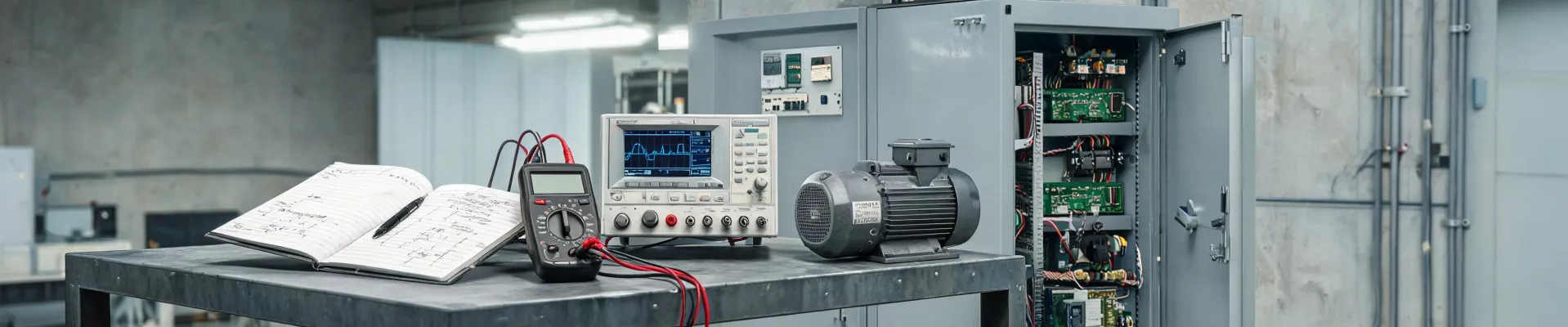
I manage operations at a test equipment distributor in North America. Over the past six years I've handled 200+ rush orders, including same-day turnarounds for electrical contractors and utility clients who showed up at our dock with a truck and no patience. So when people ask me whether they should buy through wholesale, go private label, or commission an OEM build, my honest first answer is: it depends on your situation. That's not a cop-out. It's the only useful answer.
Three weeks ago, a contractor called at 9 AM needing 20 Extech multimeters delivered to a substation site in 36 hours. Last month, a completely different company asked whether they could put their own brand on our clamp meters. Two totally different problems—and if I'd given both the same recommendation, I'd have been wrong for at least one of them.
Here's the reality: the right sourcing path depends on what you actually need, not on which option looks cheapest per unit. Wholesale, private label, and OEM each solve a specific kind of problem. Pick the wrong one, and you'll pay for it in delays, hidden markups, or brand damage you didn't see coming.
So let's do this the way I'd handle it on a call. Find your scenario below, then skip to the section that applies to you.
- Scenario 1: You need branded testers—an Extech multimeter, a clamp meter, a specific sensor model—and you need them now.
- Scenario 2: You want to sell test equipment under your own brand, but you don't have engineering resources.
- Scenario 3: You need custom-built testers or sensors to your specifications.
Scenario 1: You Need Branded Testers Fast—Go Wholesale
When speed matters and you need a recognized brand, tester wholesale distribution is your only realistic path. There's no shortcut around manufacturing lead times for custom products, so the real question becomes: which wholesale supplier actually has inventory you can touch?
What most people don't realize is that quotes from tester manufacturers and wholesale distributors vary on three things that matter far more than unit price: physical stock count, same-day shipping cut-off, and whether calibration certificates are bundled or billed separately.
In March 2024, a client called at 9 AM needing 40 Extech EX410 units for a substation compliance audit the next morning. Standard turnaround from most wholesale suppliers is 3–5 business days. We found a supplier with local stock, paid roughly $600 extra in expedited freight on top of a ~$9,000 base order, and had the units on-site by 7 AM the following day. The client's alternative was rescheduling a regulatory inspection—roughly $15,000 in crew standby costs.
That experience taught me something: in a rush, inventory location beats unit price every time. A supplier quoting 5% less but shipping from overseas is useless when you need the box tomorrow.
Scenario 2: You Want Your Own Brand on Standard Testers—That's Private Label
Private label means you're picking a proven product from an existing manufacturer's catalog and putting your logo on it. No new tooling, no custom engineering—just branding, packaging, and distribution.
Timeline: typically 4–8 weeks door-to-door, depending on quantity and the factory's current queue. MOQs are usually lower than OEM, which makes it a reasonable option for smaller distributors or regional suppliers who don't want to commit to thousands of units on a first run.
The upside is obvious—you're building your own SKU line instead of reselling someone else's. The downside is less obvious until it bites you: your brand now carries the quality of someone else's QA process. If the meter drifts or a clamp jaw fails in the field, customers won't blame the factory they've never heard of. They'll blame you.
It took me three years and roughly 150 SKUs to understand that the value of private label isn't cost savings—it's how customers perceive you. The margin difference between private label and straight wholesale resale was smaller than I expected after factoring in packaging, compliance paperwork, and minimum-order commitments. Maybe 8–12%. But the customer feedback scores on our private-label line ran noticeably higher. Same product family. Different presentation. When you compare sensor OEM vs private label purely on cost, you miss the brand equity piece entirely.
Scenario 3: You Need Custom Specs—That's OEM
OEM is a completely different game. You bring specifications—measurement range, accuracy class, housing material, interface protocol—and the manufacturer builds to your design. For sensors, this often means custom MEMS elements or signal conditioning circuits built from scratch, not picked off a catalog shelf.
Timeline: 8–16 weeks minimum. I've seen well-run custom sensor programs stretch to 22 weeks once tooling and certification enter the picture. Setup costs are higher. But at volume, the unit economics can be 20–40% better than private label or wholesale.
If you're asking yourself "OEM or private label?"—the answer usually comes down to one question: does an existing catalog product meet your requirements? If yes, private label is faster and cheaper. If no—wrong range, wrong probe, wrong certification—OEM is the only path that actually works.
Here's a mistake I see repeatedly. Two years ago, a team ordered a custom clamp meter and waited 14 weeks for tooling, only to find out during pilot production that they'd never specified temperature drift tolerances across the operating range. The first 300 units failed internal acceptance tests. Redo cost was around $18,000 plus another three months of their schedule.
The lesson isn't "don't do OEM." It's "lock your specs before the tooling order." Every week you spend finalizing requirements upfront saves 3–4 weeks on the back end.
How to Figure Out Which Scenario You're In
Three questions, in order:
- Can an off-the-shelf product meet your requirements? If yes, decide based on timeline. Under 2 weeks—go wholesale. Longer—private label.
- Does your brand already mean something to end users? If it doesn't, start with wholesale. Private label doesn't create brand recognition—it leverages recognition you've already built.
- Can you wait 8+ weeks and dedicate engineering time? If both answers are yes, OEM can unlock real value. If either answer is no, step back to private label or wholesale.
I'll say the quiet part out loud: most B2B buyers who think they need OEM actually need private label. Real OEM only pays off when catalog performance, compliance, or physical specs genuinely don't fit—and when you have someone on your team who can own the specification process.
One more thing. Don't confuse "good quote" with "good decision." The cheapest option often turns out to be the most expensive once you factor in re-quotes, compliance gaps, and brand damage from a bad batch.
If you're sourcing an Extech multimeter tomorrow, or planning a private-label sensor line for Q3, the right path is the one that matches your actual constraints—not the one that looks best on a spreadsheet.

Marta Kowalska
Marta Kowalska is an electrical equipment procurement and quality analyst covering distribution gear, automation, generators, pumps, test instruments, and engineered assemblies. She reviews IEC 61439 routine-verification records for assembly current and temperature rise, IEC 60034-1 rating and test data for rotating machines, and ISO/IEC 17025 laboratory scopes for reported calibration uncertainty. She helps buyers compare inspection status, document traceability, total installed cost, lead time, service access, spare-parts support, warranty boundaries, and failure consequences across equipment categories.