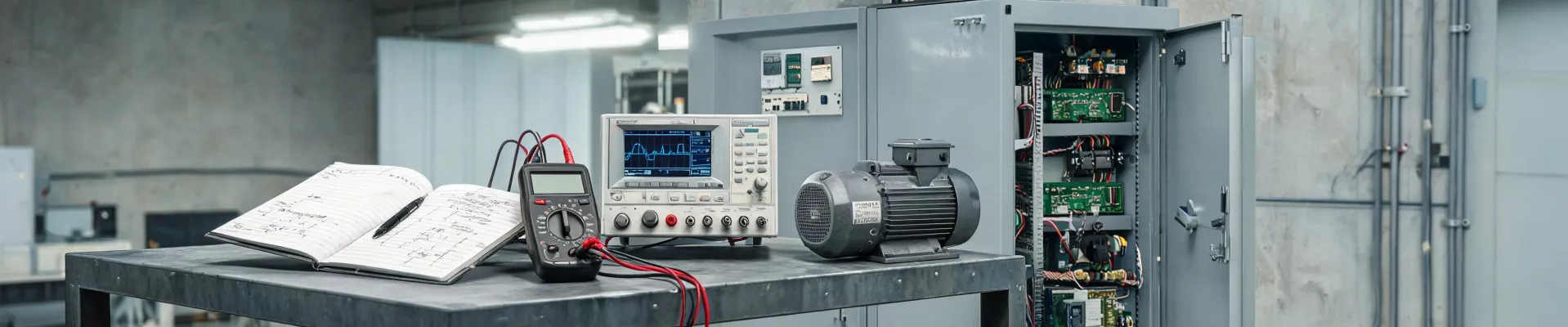
4:12 PM, the Thursday Before Commissioning
In March 2024, I got a call at 4:12 PM on a Thursday. A project manager for an electrical contractor was on the other end. She sounded calm, which was almost worse. Calm usually means the problem is big enough that panic would be a waste of time.
Her team was commissioning a commercial solar installation. Final inspection was Saturday at 7 AM. They had the panels, the inverters, the wiring, the labor. What they did not have was the testing gear. Their regular distributor had shipped the wrong sensors, and the Extech multimeters they ordered were not coming until the following Wednesday. Normal turnaround for that kind of order is 7 to 10 business days. They had about 36 hours.
Not ideal, but workable. That is what I told her. I have coordinated rush orders for electrical testing equipment for 11 years. I have handled same-day turnarounds for utility clients, emergency replacements for data center builds, and last-minute calibration requests for hospital power systems. But this one had a specific wrinkle: they needed Extech multimeter 410 clamp meters, plus a batch of current and temperature sensors, plus calibration paperwork that would satisfy an inspector.
In my role coordinating emergency orders, the first thing I do is separate what is actually urgent from what feels urgent. The multimeters were urgent. The sensors were urgent. The calibration certificates were the deal-breaker.
The Assumption That Cost Us Three Hours
I assumed in stock meant ready to ship. Did not verify. Turned out the Extech EX410 units at one warehouse were in stock as hardware, but the calibration certificates were not current. The sensors were listed as available, but half of them were bulk-packed without individual serial numbers. For a commissioning job, that is a red flag. Inspectors want traceability.
Look, I get why people think a rush order is just paying more for faster shipping. From the outside, it looks like vendors just need to work faster. The reality is rush orders often require completely different workflows, dedicated resources, and paperwork that cannot be rushed without cutting corners. The calibration side alone can take 24 to 48 hours if you are not using a lab that already has the right equipment and accreditation.
This was true 10 years ago when digital inventory systems were limited. Today, a well-organized tester distributor can often see stock across multiple warehouses in real time. That has changed. But it has not changed the fact that calibration is a physical process. You cannot download a NIST-traceable certificate.
The Discount Vendor Who Promised Everything
While I was verifying stock, the client called another vendor. I understood why. Budgets are real, and this was already going to be an expensive emergency. The vendor claimed they could supply the Extech multimeters, the sensors, and the calibration certificates as a one-stop package. They quoted a number that was roughly 18% below the two specialist quotes I had pulled.
I told her to ask three questions: Can you provide the calibration certificates before Friday at noon? Can you confirm the EX410 units meet IEC 61010-1 safety requirements for the measurement category being used? And can you give me the serial numbers before shipment?
The vendor went quiet on the third question. Then they said the certificates would follow later. That was the game-changer for me. A calibration certificate that follows later is not a calibration certificate. It is a promise. And promises do not pass inspection.
To be fair, their pricing was competitive for what they offered. But what they offered was not what the job needed. The lowest quoted price often is not the lowest total cost. If the inspector rejected the equipment, the client would miss the commissioning window, pay overtime, and potentially delay grid connection. That is a much bigger number.
Splitting the Order and Admitting the Boundary
Here is the thing: I am an emergency specialist, not a calibration lab. I can find inventory, coordinate freight, and manage deadlines. I can tell you which tester distributor actually stocks Extech Multimeter gear and which one just drop-ships from a third party. But I cannot calibrate a sensor or issue a traceable certificate. That is not my strength.
So I did what I wish more suppliers would do. I said so. I told the client we would split the order. One specialist for the Extech multimeters and clamp meters. Another specialist for the sensors. A third partner, an accredited calibration lab, for the certificates. It meant more coordination and more freight. It also meant every piece had a real owner.
I have tested 6 different rush delivery options over the years. The ones that work are not the ones that claim to do everything. They are the ones that know exactly what they do well and tell you what to handle elsewhere. The vendor who said this is not our strength, here is who does it better earned my trust for everything else.
The Delivery Window
We placed the split order at 7:40 PM Thursday. The Extech EX410 clamp meters came from a regional tester distributor that had 24 units in stock. The sensors came from a wholesaler that had the right industrial temperature range and could provide serial numbers immediately. The calibration lab worked overnight on a rush basis.
Total extra cost for the emergency: $2,840 in rush fees and expedited freight on top of a base order of about $11,600. We paid $800 extra just for the Saturday morning delivery window. But missing that deadline would have meant a $50,000 penalty clause and a delayed project closeout. Bottom line: the rush fees were annoying, but they were not the real risk.
The shipment arrived at 11:30 PM Friday. The client had the certificates by 6:15 AM Saturday. The inspector signed off at 9:40 AM. Not perfect. But done.
What the Sensor Wholesale Cost Guide Actually Looks Like
If you are buying test equipment and sensors at wholesale, the sensor wholesale cost guide is not one number. It is a stack of variables. Based on public B2B listings I reviewed in January 2025, rough ranges for 100-plus unit orders looked like this:
- Basic split-core current sensors: $15 to $45 each
- Industrial temperature or pressure sensors: $25 to $90 each
- Extech EX410 clamp meters: $95 to $150 each, depending on quantity and calibration
- NIST-traceable calibration: $20 to $50 per unit
- Rush freight and handling: plus 25% to 60%
Those ranges are not quotes. They are a ballpark. The actual number depends on accuracy class, measurement range, connector type, certification requirements, and how fast you need it. I am somewhat skeptical of any wholesale cost guide that gives you a single price without asking about those details.
Personally, I would rather pay 15% more to a tester distributor that verifies serial numbers and calibration dates than save 15% with a vendor that cannot tell me where the units came from. That is not a moral judgment. It is a risk calculation.
What I Learned From the 36-Hour Order
The old belief that local is always faster comes from an era before real-time inventory APIs and nationwide calibration networks. Today, a well-connected remote specialist can beat a disorganized local shop that does not actually stock the item. But the reverse is also true. A local shop with the right calibration partner can sometimes turn a job around faster than a national distributor with a call center.
I also learned never to assume in stock means ready to ship. After that March order, our company policy now requires a three-point check before we confirm any rush order: physical inventory confirmed, calibration status confirmed, and serial number availability confirmed. It adds 20 minutes upfront. It saves days later.
If you are sourcing Extech Multimeter gear or sensors for a deadline, do not ask for a one-stop shop. Ask for a team of specialists who know their boundaries. Ask for certificates before shipment. Ask for serial numbers. Ask what happens if the calibration lab finds a problem.
That is the real sensor wholesale cost guide. The price on the quote is only the first line. The cost of getting it wrong is the one that shows up later.

Rebecca Sloan
Rebecca Sloan is a power distribution and protection analyst specializing in circuit breakers, switchgear, contactors, fuses, surge protective devices, and coordination. She applies IEC 60947-2 breaker requirements, IEC 60269 fuse characteristics, and IEC 61643-11 tests while examining rated voltage, breaking capacity, time-current curves, selectivity, and prospective short-circuit current. She helps engineers and buyers compare protective devices against documented fault levels, installation conditions, maintenance access, and continuity priorities.